Leaderboard

Login to view leaderboard.

P
PrepVrepa year ago

Coordination Chemistry: Definition, Concepts, Isomerism, VBT, CFT & Applications

Coordination Chemistry is one of the most scoring and conceptually rich chapters in Inorganic Chemistry. It forms the foundation for understanding the behaviour of metal ions in biological systems, industrial catalysis, medicines, and analytical chemistry.

This blog post covers all key concepts—from basics to CFT—explained in a crisp, exam-ready manner for NEET, JEE, and CSIR NET aspirants.

1. What Are Coordination Compounds?

Coordination compounds are chemical species containing a central metal atom or ion surrounded by molecules or ions called ligands.

Term Meaning
Central metal ion Metal atom that accepts electron pairs
Ligand Ion/molecule donating lone pair(s)
Coordination number (CN) Number of ligand donor atoms directly bonded
Coordination sphere [Metal + ligands] written in brackets
Oxidation number Virtual charge on the metal

Examples: [Cu(NH₃)₄]²⁺, [Fe(CN)₆]³⁻

2. Ligands and Their Types

Based on Denticity (No. of donor atoms):

Monodentate: NH₃, H₂O, Cl⁻

Bidentate: Ethylenediamine (en), oxalate

Polydentate (Chelating): EDTA⁴⁻ (hexadentate)

Ambidentate Ligands

Ligands that can bind through two different atoms:

NO₂⁻ → Nitro (N-bonded) / Nitrito (O-bonded)

SCN⁻ → Thiocyanato (S-bonded) / Isothiocyanato (N-bonded)

3. Nomenclature of Coordination Compounds

While naming, follow these standard rules:

Cation is named first, then anion.

Ligands are named alphabetically.

Neutral ligands have special names:

NH₃ = ammine

H₂O = aqua

CO = carbonyl

Anionic ligands end with –o (chloro, cyano).

Metal name in anionic complex ends with –ate.

Oxidation state is shown in Roman numerals.

Example:

[Pt(NH₃)₂Cl₄]²⁻ → diamminetetrachloroplatinate(IV)

4. Isomerism in Coordination Compounds

Isomerism is a hallmark of coordination chemistry. It is divided into:

A. Structural Isomerism

Ionisation isomers – exchange of ions inside/outside the sphere

Hydrate isomers – H₂O inside or outside coordination sphere

Coordination isomers – ligand distribution between cationic/anionic complexes

Linkage isomers – ambidentate ligands (NO₂⁻, SCN⁻)

B. Stereoisomerism

Geometrical:

Cis–trans (square planar, octahedral)

fac–mer (MA₃B₃)

Optical:

Chiral complexes like [Co(en)₃]³⁺

5. Valence Bond Theory (VBT)

VBT explains hybridisation and magnetic properties.

Hybridisation in Complexes

Complex Hybridisation Type Magnetic behaviour
[Co(NH₃)₆]³⁺ d²sp³ Inner orbital Diamagnetic
[CoF₆]³⁻ sp³d² Outer orbital Paramagnetic

Strong-field ligands (CN⁻, CO, en) → pairing → low spin

Weak-field ligands (F⁻, Cl⁻) → no pairing → high spin

6. Crystal Field Theory (CFT)

CFT assumes ligands are point charges that split the d-orbitals:

Octahedral field:

Lower energy: t₂g

Higher energy: eg

Tetrahedral field:

Lower: e

Higher: t₂

Colour of Complexes

Colour arises due to d–d transitions when electrons absorb energy equal to splitting energy (Δ).

Example:

[Ti(H₂O)₆]³⁺ shows purple colour due to d–d transition.

7. The Chelate Effect

Chelating ligands form ring structures with metal ions, significantly increasing stability.

Stability order:

Monodentate < Bidentate < Polydentate

EDTA is widely used in:

1. Water hardness determination

2. Metal ion estimation

3. Medicine (heavy metal poisoning)

8. Applications of Coordination Compounds

Biological systems:

Hemoglobin (Fe²⁺–porphyrin complex)

Chlorophyll (Mg²⁺ complex)

Vitamin B₁₂ (Co complex)

Medicinal chemistry:

Cisplatin (anticancer drug)

Chelation therapy (EDTA)

Industrial processes:

Wilkinson’s catalyst (Rh complex)

Mond’s process for Ni purification (Ni(CO)₄)

Analytical chemistry:

EDTA titrations

Colorimetric detection of metal ions

9. Conclusion

Coordination chemistry beautifully connects the electronic structure of metals with their chemical behaviour, colour, magnetism, biological importance, and industrial applications. A solid understanding of CFT, VBT, and isomerism helps students secure high marks in NEET, JEE, and CSIR NET.

P
PrepVrepa year ago

5-Minute Rule: The Easiest Way to Stop Procrastinating

Every student wants to study consistently, but procrastination becomes a major hurdle. You think, “I will start in five minutes,” and suddenly hours are gone. The real problem is not studying. The problem is starting.


The 5-Minute Rule helps you break this cycle.


The rule is simple: Whenever you don’t feel like studying, tell yourself that you will study only for 5 minutes. Not one hour, not one chapter. Just 5 minutes. After 5 minutes, you are free to stop if you want.


Why does this work? Procrastination happens due to the resistance your brain creates before starting a task. Your brain sees the task as something big and stressful. But when the task sounds small, like “only 5 minutes,” the brain accepts it. Once you start, most of the time the brain shifts into momentum mode, and you naturally continue studying beyond 5 minutes.


This rule also aligns with Newton’s First Law of Motion: An object at rest remains at rest, and an object in motion continues in motion. The hardest part is moving from rest to motion. Once you start, continuing becomes easier.


How to use the 5-Minute Rule:


1. Choose a task (reading NCERT, solving PYQs, making notes).

2. Set a timer for five minutes.

3. Start the task immediately.

4. When five minutes are over, you can either stop or continue. Most students continue because the initial resistance is gone.


Even if you stop, you still win because you did not procrastinate. Action, even if small, builds discipline.


You do not need motivation to start. You just need to start. Next time you feel like delaying studies, say this to yourself:


“I am not studying for hours. I am studying only for 5 minutes.”


Small start. Big change.

5-Minute Rule: The Easiest Way to Stop Procrastinating
P
PrepVrepa year ago

Redox Reactions: Meaning, Examples, and Importance | NEET & JEE Chemistry


In chemistry, one of the most important topics for NEET and JEE exams is Redox Reactions. These reactions form the base for understanding electrochemistry, metallurgy, corrosion, and many industrial processes.

Let’s understand this concept step by step in simple language!

What Are Redox Reactions?
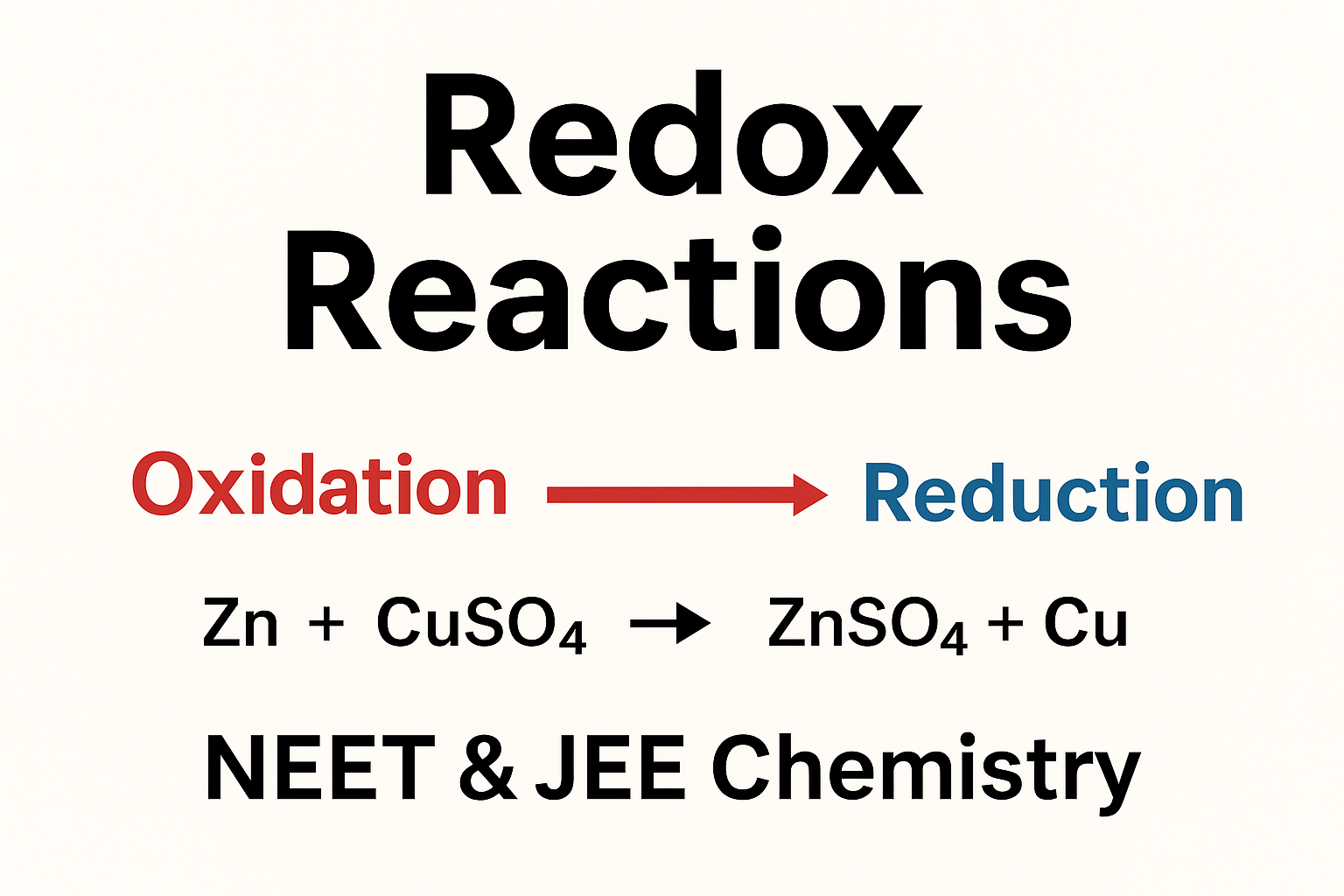
The word Redox comes from Reduction and Oxidation — two processes that always happen together.

Oxidation means loss of electrons or addition of oxygen.
Reduction means gain of electrons or removal of oxygen.

When one substance gets oxidized, another one gets reduced at the same time — that’s why the reaction is called a Redox Reaction.

Example:
When zinc reacts with copper sulfate solution:
Zn + CuSO₄ → ZnSO₄ + Cu
Here, zinc is oxidized to Zn²⁺ and copper is reduced to Cu.
Zinc → Oxidation
Copper → Reduction

Importance of Redox Reactions
Redox reactions are not just chemical equations — they are part of our daily life and technology:

  • Batteries and Cells: All electrochemical cells (like dry cells, lead-acid batteries) work on redox reactions.

  • Combustion: Burning of fuels like petrol, LPG, and coal are oxidation processes.

  • Photosynthesis & Respiration: Both involve transfer of electrons — nature’s redox cycles!

  • Industrial Processes: Extraction of metals from ores and manufacturing of chemicals like NaOH depend on redox reactions.

  • Environmental Chemistry: Concepts like ozone depletion and hydrogen economy also involve redox reactions.

Classical Idea of Oxidation and Reduction
Earlier, chemists defined oxidation and reduction based on oxygen and hydrogen:
Oxidation: Addition of oxygen or removal of hydrogen.
Reduction: Addition of hydrogen or removal of oxygen.

Now, in modern terms, we define them as loss or gain of electrons, which applies to all reactions — not just those with oxygen or hydrogen.

Everyday Life Examples

  1. Rusting of Iron: Iron + Oxygen + Water → Iron Oxide (Rust)

  2. Burning of Wood or Coal: Carbon + O₂ → CO₂

  3. Charging and Discharging of Batteries: Redox in action!

  4. Metabolism in Our Body: Food oxidation provides energy.

Why Redox Reactions Matter for NEET & JEE
Redox reactions are the foundation of Physical Chemistry. You’ll find them in:

  • Electrochemistry

  • Coordination compounds

  • Thermodynamics

  • Metallurgy

  • Organic oxidation-reduction reactions

So mastering redox is like unlocking half of the chemistry syllabus!

Final Takeaway
Redox reactions are everywhere — from the rust on iron to the energy in your phone battery. They explain how matter changes, energy flows, and chemical life operates.

If you’re a NEET or JEE aspirant, make sure you:

  • Understand electron transfer clearly.

  • Practice oxidation number method.

  • Learn redox titrations and their applications.

Author: Team prepvrep
Learn. Revise. Win.

Redox Reactions: Meaning, Examples, and Importance | NEET & JEE Chemistry
P
PrepVrepa year ago

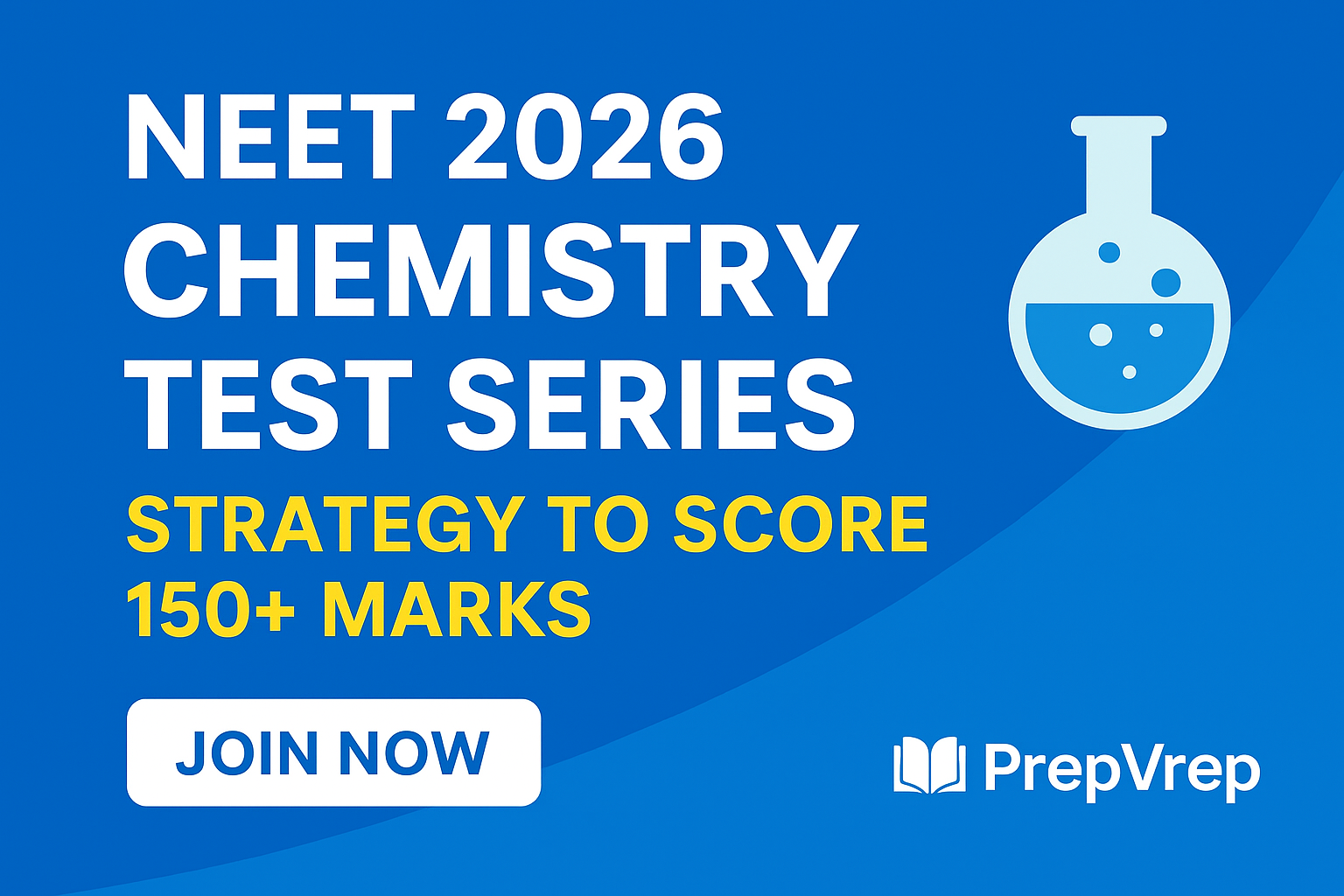
NEET 2026 Chemistry Test Series: Strategy to Score 150+ Marks

Preparing for NEET 2026? Chemistry can be your highest scoring subject if you have the right preparation strategy and practice materials. To help aspirants like you, we bring a FREE NEET 2026 Chemistry Test Series with 30+ Chapter-wise Tests, 6+ Sectional Tests, and 4+ Full-Length Tests designed as per the latest NEET pattern.


Why Chemistry is a Scoring Subject in NEET?

  • Direct NCERT-based questions ensure high accuracy.

  • Less time-consuming compared to Physics.

  • Balanced syllabus covering Organic, Inorganic & Physical Chemistry.

  • High weightage chapters boost your overall score quickly.


Free NEET 2026 Chemistry Test Series Details

  • 30+ Chapter-wise Tests – Cover every topic systematically.

  • 6+ Sectional Tests – Evaluate preparation for each section.

  • 4+ Full-Length Tests – Simulate the real NEET exam environment.

  • Detailed Solutions with explanations for each question.

  • All India Rank (AIR) for performance comparison.

  • Completely FREE using code: TEST100


Strategy to Score 150+ Marks in NEET Chemistry

  1. Master NCERT Thoroughly: Read line by line, highlight key points.

  2. Take Chapter-wise Tests Regularly: Check your progress after each unit.

  3. Focus on High-Weightage Chapters: Organic Reactions, p-block, Thermodynamics, Equilibrium.

  4. Analyze Your Performance: Identify weak topics and revise.

  5. Attempt Full-Length Tests: Practice under real exam conditions.


Topics Covered in NEET 2026 Chemistry Test Series

A. Chapter-wise Tests (30+ Tests)

  • Physical Chemistry (8 Tests):

    1. Some Basic Concepts in Chemistry

    2. Atomic Structure

    3. Chemical Bonding & Molecular Structure

    4. Chemical Thermodynamics

    5. Solutions

    6. Equilibrium

    7. Redox Reactions & Electrochemistry

    8. Chemical Kinetics

  • Inorganic Chemistry (6 Tests):
    9. Classification of Elements & Periodicity
    10. p-Block Elements (Part 1) – Group 13 & 14
    11. p-Block Elements (Part 2) – Group 15, 16, 17 & 18
    12. d-Block Elements (Transition Elements)
    13. f-Block Elements (Lanthanides & Actinides)
    14. Coordination Compounds

  • Organic Chemistry (10 Tests):
    15. Purification & Characterisation of Organic Compounds
    16. Some Basic Principles of Organic Chemistry
    17. Hydrocarbons
    18. Organic Compounds Containing Halogens
    19. Organic Compounds Containing Oxygen (Part 1) – Alcohols, Phenols, Ethers
    20. Organic Compounds Containing Oxygen (Part 2) – Aldehydes, Ketones, Carboxylic Acids
    21. Organic Compounds Containing Nitrogen
    22. Biomolecules
    23. Polymers & Environmental Chemistry
    24. Principles Related to Practical Chemistry

  • Revision Tests (6 Tests):
    25. Physical Chemistry Mixed Test 1
    26. Physical Chemistry Mixed Test 2
    27. Organic Chemistry Mixed Test 1
    28. Organic Chemistry Mixed Test 2
    29. Inorganic Chemistry Mixed Test 1
    30. Inorganic Chemistry Mixed Test 2


B. Sectional Tests (6+ Tests)

  1. Physical Chemistry Sectional Test 1

  2. Physical Chemistry Sectional Test 2

  3. Organic Chemistry Sectional Test 1

  4. Organic Chemistry Sectional Test 2

  5. Inorganic Chemistry Sectional Test 1

  6. Inorganic Chemistry Sectional Test 2


C. Full-Length Tests (4+ Tests)

  1. Full Syllabus Test 1

  2. Full Syllabus Test 2

  3. Full Syllabus Test 3

  4. Full Syllabus Test 4


How to Join the Free Test Series

  1. Download the PrepVrep App.

  2. Register with your details.

  3. Use Coupon Code TEST100 to unlock the free test series.

  4. Attempt tests every Sunday as per the schedule.


Conclusion

With our NEET 2026 Chemistry Test Series, you can master every topic, improve speed and accuracy, and aim for a 150+ score in Chemistry. Don’t wait—start today and take your preparation to the next level!

Join Now → Download the PrepVrep App and use code TEST100 to unlock all tests for free.

NEET 2026 Chemistry Test Series: Strategy to Score 150+ Marks